
The North Eastern Research Bulletin (NERB)
An annual peer-reviewed research journal of the Department of Sociology, Dibrugarh University.
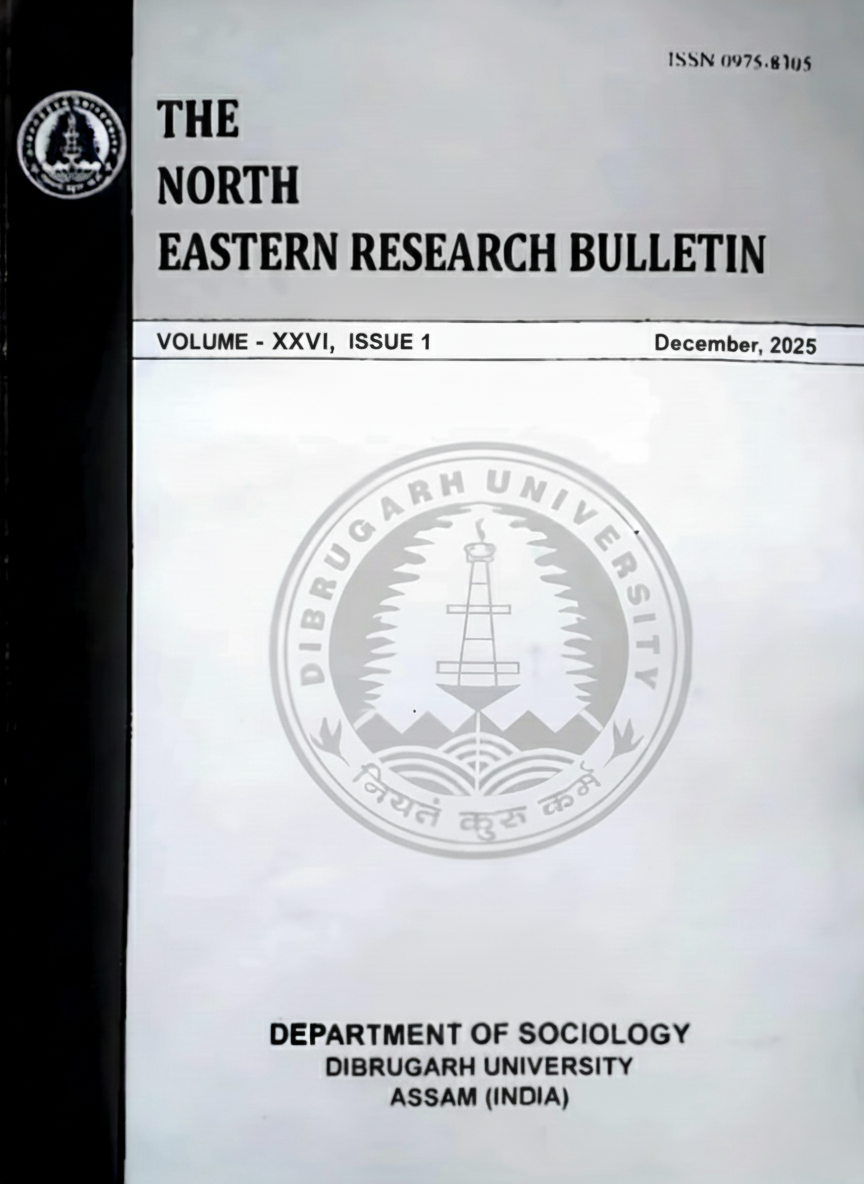
Aims and Scope
The North Eastern Research Bulletin is an annual, referred journal published by Dibrugarh University since 1970. It covers a range of sociological and other subjects pertaining to Northeast India and is published by the Registrar's office of Dibrugarh University each year.
Editor
Dr. Bikash Deka
FAQ (Frequently Asked Questions)
To get the author's complete guidelines before commencing your work click here
01How can I submit my manuscript?
Completed manuscript as per the journal should be submitted through our sumbission portal
02What are the guidelines for authors?
Please refer to the Author's Guidelines section on our website for detailed information.
03 How is the peer review process conducted?
All submitted manuscripts undergo a rigorous peer review process to ensure high-quality research publication.

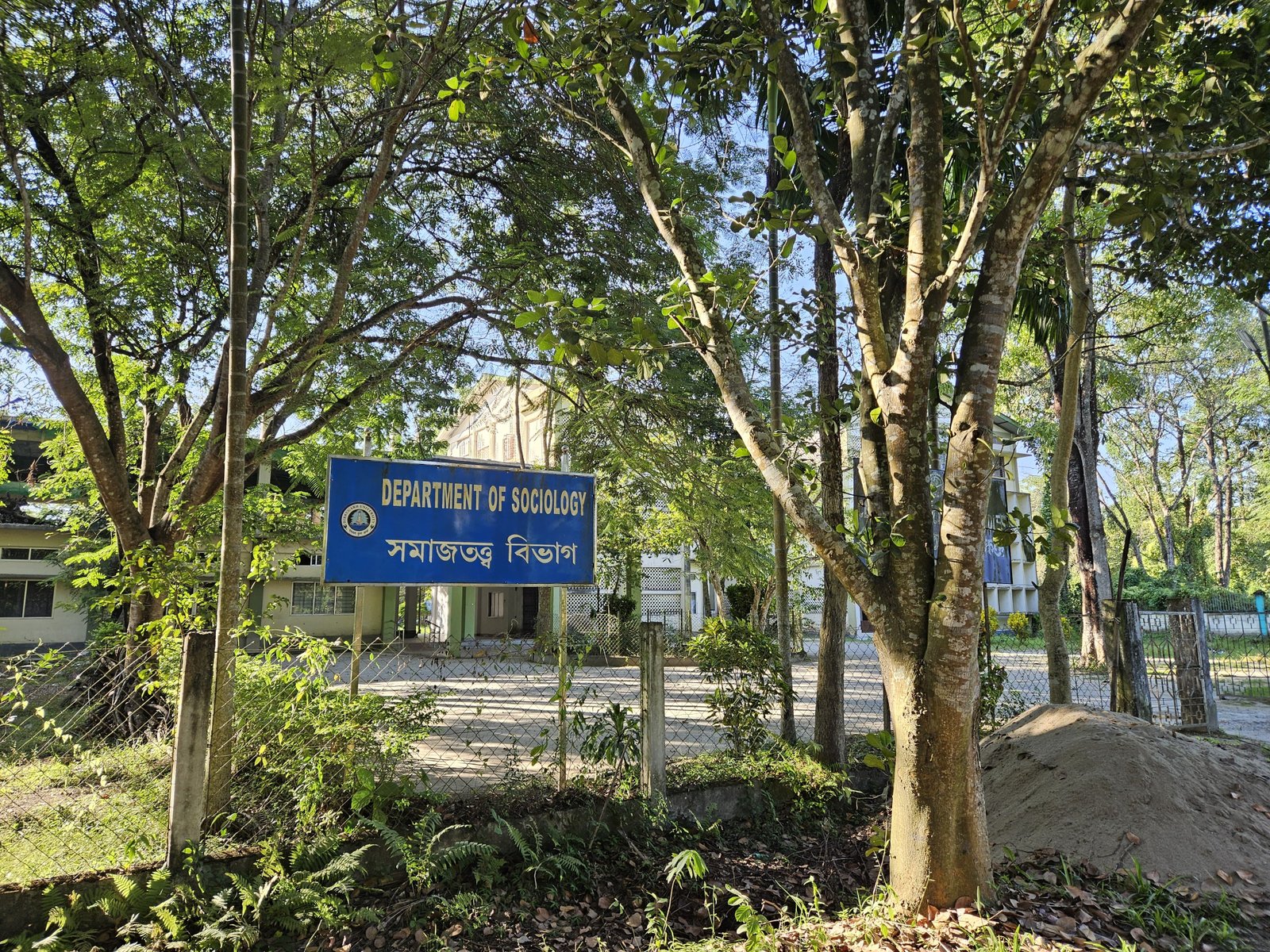
How to contribute ?
Join our community of scholars and contribute to the growing body of knowledge in Sociology
Editorial Board
Editorial Board Members
Editorial Advisory Board
Here are some words from our esteemed team members and collaborators.
REVIEWER'S GUIDELINES
1. Peer Review and Editorial Procedure
Peer review is an essential part of the publication process and it ensures that NERB maintains the highest quality standards for its published papers. All manuscripts submitted to our journals will be strictly and thoroughly peer-reviewed by experts.
Immediately after submission, the journal's Editor will perform a technical pre-check of the manuscript. After an editorial pre-check he or she will recommend reviewers. After receiving the comments from the reviewers, the Editorial Board can decide to continue with the peer review process, suggest modification in a manuscript, or request revisions to another peer-reviewer or the Board can do it themselves. In the case of continuing the peer review process, the Editor will organize the peer review, which is performed by independent experts, and collect at least two review reports per manuscript. We ask authors for sufficient revisions (with a second round of peer review, when necessary) before a final decision is made. The final decision is made by the Editorial Board (usually the Editor-in-Chief/Editorial Board Member of a journal or the Guest Editor of a Special Issue). Accepted manuscripts are then thoroughly checked and all grammatical proof reading will be checked by the Editorial board members.
2. Reviewers' Profile and Responsibilities
The role of the reviewer is vital and bears a great responsibility in ensuring the integrity of the scholarly record. Every reviewer is expected to perform manuscript evaluation in a timely, transparent, and ethical manner, following the COPE guidelines.
Reviewers should meet the following criteria:
- Hold no conflicts of interest with any of the authors;
- Should not come from the same institution as the authors;
- Should not have published together with the authors in the last three years;
- Have relevant experience and have a proven publication record in the field of the submitted paper (Scopus, ORCID);
- Hold an official and recognized academic affiliation.
NERB strives for a rigorous peer review to ensure a thorough evaluation of each manuscript. This is a fundamental task for our reviewers. Reviewers who accept to review a manuscript are expected to:
- Have the necessary expertise to judge the scientific quality of the manuscript;
- Provide quality review reports and remain responsive throughout the peer review process;
- Maintain standards of professionalism and ethics.
3. Reviewers' Benefits
Reviewing is often an unseen and unrewarded task, despite being crucial. We are striving to recognize the efforts of all our reviewers.
Reviewing for NERB brings the following benefits:
- The reviewers will receive an Appreciation certificate from the Editor of the Journal.
4. Reviewer Board
The Reviewer Board (RB) consists of experienced researchers whose main responsibility is to regularly and actively support journals by providing high quality, rigorous, and transparent review reports for submitted manuscripts within their area of expertise. The initial term is for 1 year which can then be renewed or terminated. Membership involves the same responsibilities and benefits as regular reviewers, with the addition of:
- a. RB Members must review a minimum of 2 manuscripts per year. Should the reviewer be unable to provide a report when invited, they are expected to suggest alternative potential reviewers.
- b. RB Members are entitled to receive an RB certificate.
- c. RB Members are announced on the journal website.
5. Volunteer Reviewers
NERB journals are actively looking for volunteers to review manuscripts. The members of NERB's Reviewer Board and Volunteer Reviewers can actively offer to review manuscripts in one or more of NERB's journals.
To become a member of this program, the editorial board will notify this if feels the necessity.
6. General Guidelines for Reviewers
6.1 Invitation to Review
Manuscripts submitted to NERB journals are reviewed by at least two experts, reviewers suggested by the editor during the preliminary check. Reviewers are asked to evaluate the quality of the manuscript and to provide a recommendation to the external editor on whether a manuscript should be accepted, requires revisions, or should be rejected.
We ask invited reviewers to:
- Accept or decline any invitations as soon as possible (based on the manuscript title and abstract);
- Suggest alternative reviewers if an invitation must be declined;
- Request a deadline extension as soon as possible in case more time is required to provide a comprehensive report.
6.2 Potential Conflicts of Interest
We ask reviewers to declare any potential conflicts of interest and email the journal Editorial Office if they are unsure if something constitutes a potential conflict of interest. Possible conflicts of interest include (but are not limited to):
- Reviewer works in the same institute as one of the authors;
- Reviewer is a co-author, collaborator, joint grant holder, or has any other academic link, with any of the authors within the past three years;
- Reviewer has a close personal relationship, rivalry or antipathy to any of the authors;
- Reviewer may in any way gain or lose financially from publication of the paper;
- Reviewer has any other non-financial conflicts of interest (political, personal, religious, ideological, academic, intellectual, commercial or any other) with any of the authors.
Reviewers should disclose any conflicts of interest that may be perceived as bias for or against the paper or authors.
Please kindly note that if reviewers are asked to assess a manuscript they previously reviewed for another journal, this is not considered to be a conflict of interest. In this case, reviewers should feel free to let the Editorial Office know if the manuscript has been improved or not compared to the previous version.
6.3 Declaration of Confidentiality
NERB journal operate single- or double-blind peer review. Until the article is published, reviewers should keep the content of the manuscript, including the Abstract, confidential. Reviewers should also be careful not to reveal their identity to the authors, either in their comments or in metadata for reports submitted in Microsoft Word or PDF format.
NERB offer the possibility for authors to publish review reports together with their paper (Open Peer Review) and for reviewers to sign their open peer review reports once "Open Peer Review") is selected by the authors. However, this will only be done at publication with the reviewer's permission. In all other cases, review reports are considered confidential and will only be disclosed with the explicit permission of the reviewer.
6.4 Review Reports
The review report must be prepared in English. We have listed some general instructions regarding the review report for your consideration below.
To begin with, please consider the following guidelines:
- Read the whole article as well as the supplementary material, if there is any, paying close attention to the figures, tables, data, and methods.
- Your report should critically analyse the article as a whole but also specific sections and the key concepts presented in the article.
- Please ensure your comments are detailed so that the authors may correctly understand and address the points you raise.
- Reviewers must not recommend citation of work by themselves, close colleagues, another author, or the journal when it is not clearly necessary to improve the quality of the manuscript under review.
- Reviewers must not recommend excessive citation of their work (self-citations), another author's work (honorary citations) or articles from the journal where the manuscript was submitted as a means of increasing the citations of the reviewer/authors/journal. You can provide references as needed, but they must clearly improve the quality of the manuscript under review.
- Any AI tools and other large language models (LLMs) should not be used by reviewers in the preparation of review reports. Reviewers are solely responsible for the content of their reports, and the utilization of these tools may violate confidentiality, proprietary, and data privacy rights. Limited use to improve the written quality of a peer-review report, such as correcting grammar, structure, spelling, punctuation and formatting, may be acceptable but should be disclosed upon the submission of the peer-review report.
Review reports should contain the following:
- A brief summary (one short paragraph) outlining the aim of the paper, its main contributions and strengths.
- General concept comments
- Article: highlighting areas of weakness, the testability of the hypothesis, methodological inaccuracies, missing controls, etc.
- Review: commenting on the completeness of the review topic covered, the relevance of the review topic, the gap in knowledge identified, the appropriateness of references, etc.
- These comments are focused on the scientific content of the manuscript and should be specific enough for the authors to be able to respond.
- Specific comments referring to line numbers, tables or figures that point out inaccuracies within the text or sentences that are unclear. These comments should also focus on the scientific content and not on spelling, formatting or English language problems, as these can be addressed at a later stage by our internal staff.
General questions to help guide your review report for research articles:
- Is the manuscript clear, relevant for the field and presented in a well-structured manner?
- Are the cited references mostly recent publications (within the last 5 years) and relevant? Does it include an excessive number of self-citations?
- Is the manuscript scientifically sound and is the experimental design appropriate to test the hypothesis?
- Are the manuscript's results reproducible based on the details given in the methods section?
- Are the figures/tables/images/schemes appropriate? Do they properly show the data? Are they easy to interpret and understand? Is the data interpreted appropriately and consistently throughout the manuscript? Please include details regarding the statistical analysis or data acquired from specific databases.
- Are the conclusions consistent with the evidence and arguments presented?
- Please evaluate the ethics statements and data availability statements to ensure they are adequate.
General questions to help guide your review report for review articles:
- Is the review clear, comprehensive and of relevance to the field? Is a gap in knowledge identified?
- Was a similar review published recently and, if yes, is this current review still relevant and of interest to the scientific community?
- Are the cited references mostly recent publications (within the last 5 years) and relevant? Are any relevant citations omitted? Does it include an excessive number of self-citations?
- Are the statements and conclusions drawn coherent and supported by the listed citations?
- Are the figures/tables/images/schemes appropriate? Do they properly show the data? Are they easy to interpret and understand?
- Importance of Sociological input in the manuscript.
The content of your review report will be rated by the Editorial Board from a scientific point of view as well as general usefulness to the improvement of the manuscript. The overall grading results will be used as a reference for potential promotion of Reviewer Board Members, Volunteer Reviewers and regular Reviewers.
6.5 Rating the Manuscript
During the manuscript evaluation, the Editorial Board will rate the following aspects:
- Novelty: Is the question original and well-defined? Do the results provide an advancement of the current knowledge?
- Scope: Does the work fit the journal scope?
- Significance: Are the results interpreted appropriately? Are they significant? Are all conclusions justified and supported by the results? Are hypotheses carefully identified as such?
- Quality: Is the article written in an appropriate way? Are the data and analyses presented appropriately? Are the highest standards for presentation of the results used?
- Scientific Soundness: Is the study correctly designed and technically sound? Are the analyses performed with the highest technical standards? Is the data robust enough to draw conclusions? Are the methods, tools, software, and reagents described with sufficient details to allow another researcher to reproduce the results? Is the raw data available and correct (where applicable)?
- Interest to the Readers: Are the conclusions interesting for the readership of the journal? Will the paper attract a wide readership, or be of interest only to a limited number of people? (Please see the Aims and Scope of the journal.)
- Overall Merit: Is there an overall benefit to publishing this work? Does the work advance the current knowledge? Do the authors address an important long-standing question with smart experiments? Do the authors present a negative result of a valid scientific hypothesis?
- English Level: Is the English language appropriate and understandable?
6.6 Overall Recommendation
The reviewers will provide overall recommendation for the next processing stage of the manuscript as follows:
- Accept in Present Form: The paper can be accepted without any further changes.
- Accept after Minor Revisions: The paper can in principle be accepted after revision based on the reviewer's comments. Authors are given five days for minor revisions.
- Reconsider after Major Revisions: The acceptance of the manuscript would depend on the revisions. The author needs to provide a point-by-point response or provide a denial if some of the reviewer's comments cannot be revised. A maximum of two rounds of major revision per manuscript is normally provided. Authors will be asked to resubmit the revised paper within ten days and the revised version will be returned to the reviewer for further comments.
- Reject: The article has serious flaws, makes no original contribution, and the paper may be rejected with no offer of resubmission to the journal.
Note that your recommendation is visible only to journal editors, not to the authors. Decisions on revisions, acceptance, or rejections must always be well justified.
ABOUT
| Particular | Details |
|---|---|
| Title | The North Eastern Research Bulletin (NERB) |
| Frequency | Annual |
| ISSN (Print) | 0975-8305 |
| ISSN (Online) | Applied for |
| Publisher | Department of Sociology, Dibrugarh University, Dibrugarh, Assam-786004 |
| Editor | Dr. Upasona Sarmah |
| Copyright | The Registrar, Dibrugarh University |
| Starting Year | 1970 |
| Subject | Sociology |
| Language | English |
| Publication Format | Both Print and Online |
| Phone No. | 9435476159 |
| Email Id | ner.bulletin.du@gmail.com |
| Website | https://nerdu.in |
| Address | Department of Sociology, Dibrugarh University, Dibrugarh, Assam-786004 |
Contact
Get in touch with us
Address
Faculty of Social Sciences,
Department of Sociology Dibrugarh University, Dibrugarh-786004, Assam (India)
Email Us
ner.bulletin.du@gmail.com
Phone
7002740089